I-DEEL: Inter-Disciplinary Ecology and Evolution Lab
  • Home
  • People
  • Research
  • Publications
  • Blog
  • Open Science
    • Registrations
    • Registered Reports
    • Published Protocols
    • Preprints
    • EDI
    • Other
  • Opportunities
  • Links

Is collaboration the key to success in the modern academic world?

28/5/2024

0 Comments

 
by Kyle Morrison

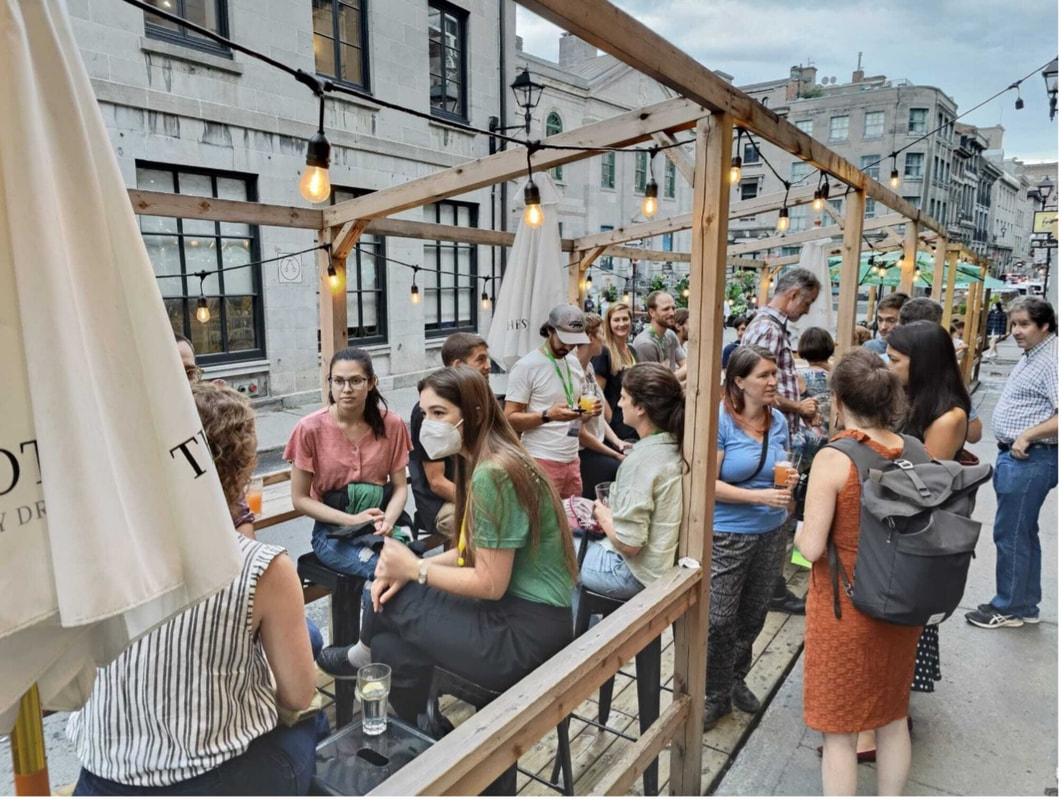
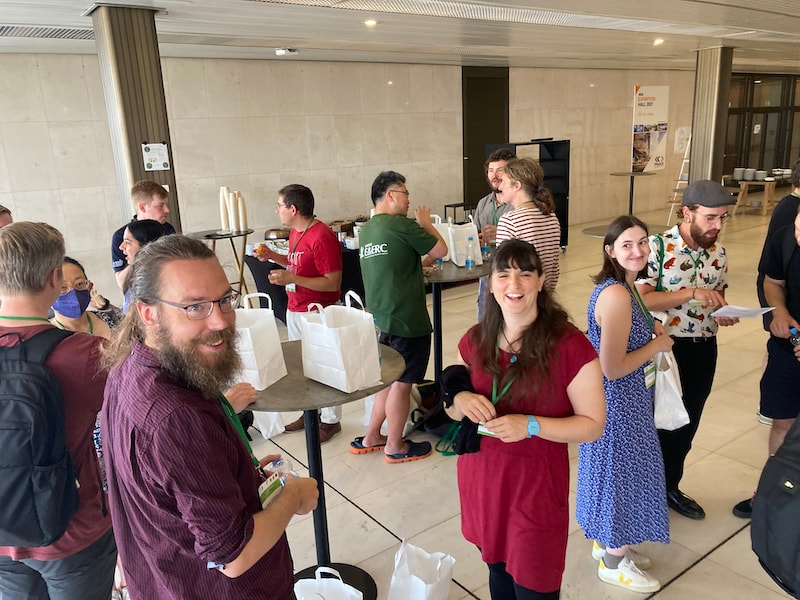
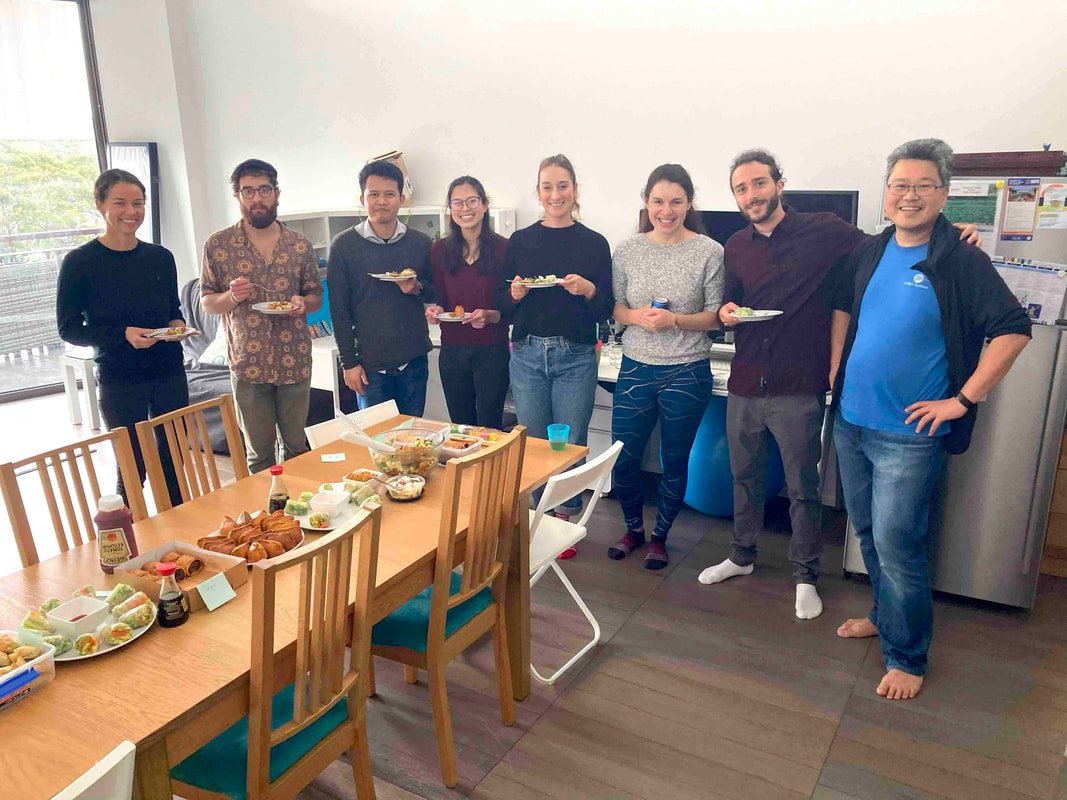
We like to think that our species, Homo sapiens, is unique. We’ve crafted a multitude of intricate societies, vibrant cultures, and a vast array of languages. Not to mention, we have basically inhabited every climate zone earth has to offer. But how? Contrary to common belief, it is not because our genes are selfish or that we were the smartest species on the plains of eastern Africa a mere 100,000 years ago. After all, selfishness and intelligence is hardly unique to us (see https://www.youtube.com/watch?v=LotIelkiZHM for an impressive act of animal intelligence). In fact, it is likely the opposite; friendliness and collaboration is likely the greatest attributor to the success of human society (Hare, 2017).
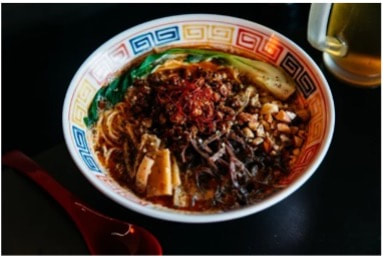
Picture
Photo by Kyle Morrison
Despite friendliness and collaboration being key to the success of humanity, collaboration in science remains scarce. To understand why, we must consider the current state of science. There is a pervasive culture of "publish or perish," exacerbated by the intense competition for academic positions. Researchers may perceive collaboration as detrimental to their own progress. After all, why invest time in helping others when they could be future competitors for the same jobs?
​I pose that this ‘selfish’ attitude which appears frequently in science is costly. When scientists, especially early career researchers, work in isolation and don't contribute to projects beyond their own, they miss out on the huge benefits that come from diverse perspectives and outside expertise. Collaborators outside one's 'echo chamber' can provide fresh insights, challenge assumptions, and introduce new approaches that can significantly improve the quality and impact of research. Plus, collaboration often leads to more opportunities for co-authorship, which can help boost one's publication record and academic profile. This not only advances individual careers but also speeds up scientific progress as a whole. By not embracing collaboration, we’re missing out on both personal and collective gains, making it crucial to promote a more cooperative research environment.
Using today’s technology, international collaboration is easier than ever. The pandemic promoted a range of video calling apps such as Zoom, Microsoft Teams, and Google Meet, which allow face-to-face meetings globally without needing to leave the comfort of your own office. Meanwhile, version control software such as GitHub allows collaboration on code, which not too long ago was a difficult task. Additionally, platforms like Slack facilitates seamless project management and communication, enabling teams to stay organized and on track no matter where they are in the world. These tools have revolutionized the way we work together, making it possible to collaborate effectively and efficiently even when we are physically separate. Given the benefits and the fact that is easier than ever, maybe in today’s academic world, it may be worth considering what got us here in the first place and just be friendly and collaborate.
References
  • Hare, B., 2017. Survival of the friendliest: Homo sapiens evolved via selection for prosociality. Annual review of psychology, 68, pp.155-186.
  • Hare, B. and Woods, V., 2021. Survival of the friendliest: Understanding our origins and rediscovering our common humanity. Random House Trade Paperbacks.
0 Comments

If you don’t manage your time, the time will manage you

29/4/2024

0 Comments

 
​By Szymek Drobniak
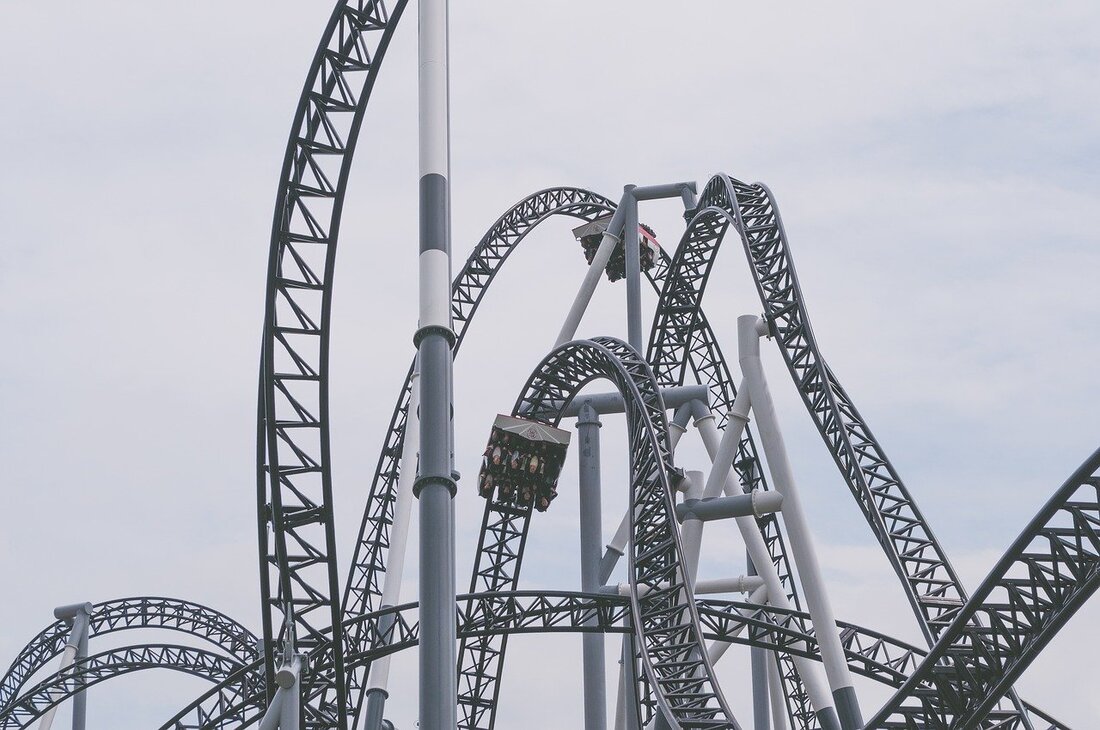
Picture
Image from Pixabay, @robert_owen_wahl
Time is money – it’s a truism that nobody would dare to question. In our particular type of job – in being a scientist – time also equals benchmarks, indices, track record. The more time we have – the more papers we should be able to publish, the more students to supervise, the more brilliant ideas turn into reality. Interestingly, science also tends to be particularly rich in people representing all kinds of neurodiversity. My hypothesis is that such people are also often particularly creative. Unfortunately, certain kinds of neurodiversity can throw sand into well-oiled gears of our scientific work. Here’s a bunch of recommendations a veteran of ADHD, such as myself, can offer to make the working scientific life of at least some of you a bit more predictable and satisfying.
  • Do not discard methods such as Pomodoro as overly simplifying or lacking flexibility (for those not into tomatoes: dividing your work into small, 15-30 mins. chunks, separated by short (5-10 mins.) breaks). Pomodoro may be surprisingly effective in identifying the ways you waste your working time (see what takes you during breaks and what makes them harder to finish), and in learning how to quantise your tasks into well-defined steps. My all-time favourite in implementing this method is the Be Focused app – but the Internet abounds in other options.
  • Keeping track of ones’ calendar is one of the most annoying activities. Try to cultivate the following habit: the moment you plan a meeting, receive and invite, decide on a task or receive a task – put it into your calendar. Do not postpone doing this – your few taps on your phone away from permanently recording the task for future and freeing your mind from having to remember it. Also – make it a habit to check your calendar every morning.
  • Do the same with a to-do list (yes, you want to have one, desperately). Some picks to consider – Todoist app, Tasks app, or whatever speaks to you functionally and visually. I would also like to preempt a question you surely will have: isn’t using calendar and a to-do list superfluous/too time consuming? It may be – but clever people have come up with solutions that connect to-do lists with calendars in a seamless way. If you want a hassle-free experience, without having to reschedule or move items as new things enter your agenda, consider checking out AI tools that manage your calendar for you. My current favourite is reclaim.ai – I honestly do not remember when I had to manually reschedule anything in my calendar.
  • If a task/activity is taking too much time (e.g., because it is too difficult and you’re stuck without new ideas, or it begins to bore you) – leave it for a while (unless, of course, your being chased by a hard deadline, breathing frantically into your neck). Wonders happen when you set a task or problem aside or – even better – sleep with it.
  • During the day, deal with the least liked tasks first.
  • Don’t be afraid to declare some ours of your day/week as off-limits for others (within the limits of reason and your responsibilities, of course).
  • To retain sanity and balance – try to do work at work, and non-work/fun things elsewhere. Don’t mix you working and leisure spaces. And for the sake of all known gods – don’t take work to bed. Some things do not mix well – like oil and water, or work and resting.
Picture
Image from Pixabay, @robert_owen_wahl
0 Comments

The SQuID 2024

31/3/2024

0 Comments

 
by Ayumi Mizuno

The SQuID (Statistical Quantification of Individual Differences*1) statistical workshop took place this March at Hokkaido University in Japan (Shinichi is a member of the SQuID team. He and my PhD supervisor decided to hold the workshop here). I had only attended workshops and seminars as a student before, but this time, I also prepared this workshop as a local staff member for around six months, with Shinichi.

The lectures were amazing. The course began with the basic linear model, but on the last day, we had the chance to conduct a simulation on our data using the squidSim package in R. Through the workshop, I became more familiar with how linear mixed models work and what insights they can provide about my research. In addition, I learned that simulations help understand the models better and are useful for planning data collection and analysis. The participants had diverse research backgrounds and countries of origin, so the conversation during break time was also exciting.

Watching participants enjoying coding and interacting with others made me feel all my work had paid off. I had predicted that some accidents might happen, but everything went smoothly. Even though preparing the workshop took up a lot of time*2, it was definitely a valuable experience for me.
​
To conclude, I would like to share four small tips for people (like me) organising workshops or seminars for the first time. These are all general points but essential:
  1. Early preparation is key. Most tasks often take longer than expected.
  2. Communication is essential. Do not be afraid to check with the person you are working with, even if it is small. This can prevent irreversible mistakes.
  3. Put yourself in your participants’ shoes. What may seem obvious to you might not be as clear to them.
  4. Prepare plenty of drinks and snacks (both sweet and savoury tastes). While this tip may seem somewhat unrelated, it significantly contributes to the workshop's success by keeping participants focused and motivated (hunger or thirst can greatly affect these).
 
----------------
*1 Please check this link for detailed SQuID info.: https://squidgroup.org/
*2 I had some sleepless nights worrying about whether the workshop would go well.
0 Comments

The importance of science communication

29/2/2024

0 Comments

 
by Samantha Burke
Picture
Photo courtesy of The Struggling Scientists Podcast

The scientific method is a long-standing framework used to teach aspiring scientists how to conduct research and experiments. However, I believe even well-established scientists could benefit from a reminder about the final, and arguably most important, step: communication of the findings. As many memes across social media would suggest, scientists hate writing. This hatred is further proven by the “file drawer problem” where researchers would rather leave completed experiments to die in the metaphorical (or physical) file drawer than to write and publish the work.
​
I must acknowledge that there are a variety of reasons work doesn’t get published. Oftentimes, it’s the high paywall a lot of journals require for publication. Also of note are the biases against non-English (or English as a second language) researchers and the systemic barriers researchers from the Global South face.

Even those researchers without these barriers and with publications do not communicate their work effectively. Recently, I published a second-order synthesis of coral health research, which found that while review-level literature was fairly well cited amongst scientific literature, the reach of this same research outside academia had much room for improvement. The high citations among academics makes sense, as much of research currently focuses on a “publish or perish” rhetoric, where publication is the last step of the scientific method rather than communication in general. However, research needs to be communicated to these external bodies, as these are often the groups which ultimately drive funding.

Beyond publications and citations, scientists regularly participate in internal communication – most often at conferences giving presentations or creating posters about their research. However, conferences are also environments where scientists are speaking to other specialized researchers. In these cases, there’s no need to explain complex topics with simple language, which is a difficult skill only honed through practice. When these same presentations or posters are presented to a non-specialised audience, it often perpetuates the idea that STEM is difficult to understand and can only be known by an elite few.

In the final year of my PhD, I committed to broadening my involvement in science communication (SciComm). There are so many avenues available to researchers to communicate their research. As such, science is the most interdisciplinary it’s ever been and has the ability to reach audiences all over the world. I’ve put together a list of the top ways I’ve found success in communicating my research.

1. Pub talks

These are rare opportunities, though the most famous one occurs once a year called “Pint of Science.” Going to locations that people outside of the science field are likely to spend time is a great way of ensuring your research is reaching a wide audience. In these situations, I find it best to keep your explanations snappy and passionate. People generally respond well to enthusiasm and a more casual tone.

2. Comedy

​The universal way to relate to people. Comedy is less an opportunity to spread your research, and more about how you should communicate it. Oftentimes, people outside of science find science unapproachable or confusing. By bridging this gap in ways people empathise with, scientists can better relay their findings to groups outside their field.

3. STEM outreach events

Outreach events are the most common way science communicators will reach the public. These events are great because they are often in person events and provide the opportunity to attendees to really engage with the science. In these settings, creating activities, physical models, specimen, or any way your audience can “get their hands dirty” in science is going to be a hit.

4. Guest talks (e.g., skype a scientist)

While the name implies an invitation and thus no effort on the scientists part, guest talks usually come as the result of your own efforts. There are many programs which you can express interest for which will help connect you to parties interested in hearing about current research. I personally have worked with groups like CSIRO, Skype a Scientist, and Deadly Science – all of which are amazing organisations dedicated to increasing involvement in STEM. I’ve found lots of pictures and personal stories are great ways to engage with your audience, particularly if you’re delivering content virtually.

5. Social media

In such a connected age, social media can be a great tool for communicating research. While researchers are most familiar with Twitter (now called “X”), I’ve found there is a growing community of SciComm specialists in other social media platforms. As Instagram and TikTok are huge hits with younger generations, researchers have created wonderful online personalities to engage with upcoming science enthusiasts to share their work, answer questions, and provide guidance.

6. Website

Websites, while a great tool to have as a reference to your work and CV, are not the best way to communicate your research. They often need to be searched for, and as a single researcher (not a website controlled and advertised by your institution), traffic is quite hard to come by. While I recommend setting a website up so you can refer all your audiences from the above SciComm events to find you, these alone are insufficient. Treat your website like a center hub to which all your events, publications, media articles, socials, etc. are all connected. I recommend jazzing the website up with lots of photos and other content besides your CV. Giving people something to engage with may have them coming back for more!
 
Happy communicating!

0 Comments

Around meta-analysis (15): emerging Large Language Models (LLM) tools

30/1/2024

0 Comments

 
by Malgorzata (Losia) Lagisz

Systematic reviews (and meta-analyses based on a systematic review of literature) are extremely time-consuming. Anyone who conducted one in a rigorous and robust way can attest to this fact. Not surprisingly, researchers across disciplines have been looking for using computer algorithms and software to automate and accelerate systematic reviews of academic literature.
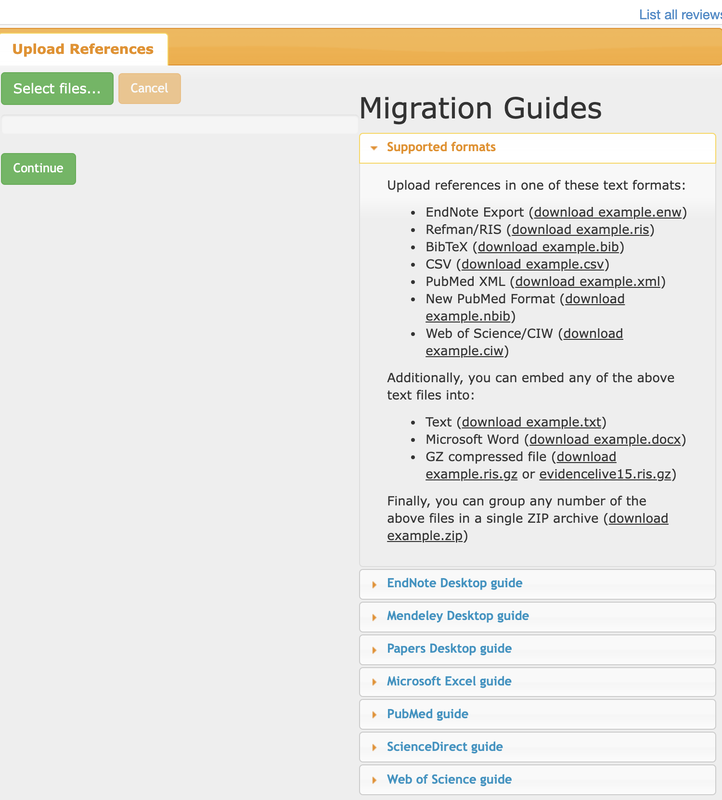
Picture
free image from pixabay.com
Such efforts have brought some success. Algorithms based on text-mining, artificial intelligence (AI), and more specifically machine-learning approaches, are now integrated in some of the popular software dedicated to literature screening (e.g., Rayyan, Abstracr, ASReview) and even data extraction (e.g., RobotReviewer). Other group of algorithms can suggest relevant evidence based on similarities among documents (e.g., ConnectedPapers, and recommendation systems built into major literature search platforms). However, these tools perform well only in a limited set of scenarios and applications, require extensive and expert initial training investment, and many are not freely accessible. For a recent scoping review of diverse types of automation tools, their applications and drawbacks, see Khalil et al. (2022).
It is tempting to think that a recent development of a new generation of AI models and software has better performance and new capabilities. Especially, Large Language Models (LLMs) are trained on large datasets of written language (think ChatGPT and similar models). They can be operated by using user prompts in conversational language, rather than technical programming languages, which makes them user-friendly. Why not ask them to find relevant studies, highlight or summarise relevant information do the screening for you?
Unfortunately, generic LMMs, like ChatGPT are less than ideal for systematic reviews. They tend to hallucinate (invent evidence), are not accurate, and require expert knowledge and careful set up to provide useful output (Qureshi et al. 2023). Among the many likely reasons for the poor performance, one is their probabilistic nature (making decisions based on probabilities of patterns) and the other one is that ChatGPT models are not trained specifically on academic literature. And they were not rally designed to do work for scientists.

Are there LLMs tailored to academic literature and requirements of researchers? In the last months, such tools were rapidly emerging (Sanderson 2023). Since the y are new, there are no rigorous published assessments of their performance. I tried a few out, but cannot provide any concrete data or recommendations yet. I think we should not aim to fully automate any systematic review steps but, instead, we can use such new tools as an “another reviewer” or an alternative approach that supplements and strengthens our existing workflows.
​
Picture
free image from pixabay.com
Picture
free image from pixabay.com
If you are interested in LLMs that look like potentially useful in systematic reviews workflows (and testing how much you can trust them!), here is my short list of suggestions:
  • Elicit (elicit.com)
  • Scite (scite.ai)
  • Typeset (typeset.io)
  • Consensus (consensus.app)

References:
  • Khalil H, Ameen D, Zarnegar A. Tools to support the automation of systematic reviews: a scoping review. J Clin Epidemiol. 2022 Apr;144:22-42. doi: 10.1016/j.jclinepi.2021.12.005. Epub 2021 Dec 8. PMID: 34896236.
  • Qureshi, R., Shaughnessy, D., Gill, K.A.R. et al. Are ChatGPT and large language models “the answer” to bringing us closer to systematic review automation?. Syst Rev 12, 72 (2023). https://doi.org/10.1186/s13643-023-02243-z)
  • Sanderson K. AI science search engines are exploding in number - are they any good? Nature. 2023 Apr;616(7958):639-640. doi: 10.1038/d41586-023-01273-w. PMID: 37069302.
0 Comments

A secret in a paradise: recollecting on 2023

31/12/2023

0 Comments

 
by Shinichi

During my study leave at Okinawa Institute of Science and Technology, OIST, Japan (2023), I walked to my office at OIST every morning. I often took a route where I could get a full view of the cobalt-blue coral sea of Tancha Bay and, in the distance, Ie Island. Then, I often thought this must be how a paradise would look like.
​
Picture
Tancha Bay
Picture
our accommodation
Picture
Ie Island in the distance
​Enjoying the view of a paradise, I had a secret. I was waiting for a “Love Letter from Canada” (which happens to be the name of a famous Japanese song). In fact, our 2023 started with a trip to the University of Alberta, Edmonton, Canada, where I applied for a Canada Excellence Research Chair (CERC), although there was no guarantee I would get one.  
An outcome was supposed to come out in early Spring, but it was already the 5th of May. For the previous two nights, I could not sleep in pain and walked around the OIST campus after midnight for hours. Earlier in the year, I was diagnosed with gallstones and was told I would have to have them removed at some point. On that day, I woke up at 3.30 am with incredible pain, so I could not go back to sleep. Instead, I started checking my email, and there was an email – the long-awaited letter – a CERC success!
​And I screamed for joy and agony, and I walked down to Tancha Bay to ease my excitement and throbbing pain. It was ~6 am when I returned home. Then, my wife, who just got up, took me to the hospital. It was a Japanese holiday, so only emergencies were open. To make a long story short; I got operated on and got gallstones removed. I had to stay in a hospital for a few days, which I had never done. On my hospital bed, feeling discomfort physically and mentally, I thought about how to tell my group members and friends about my news. The news of CERC was embargoed until the official announcement (it turned out, till mid-November last year), although I was allowed to tell people who would be affected, informally.
​I told the big news to my lab group members one by one online, and each of them was surprised, but they were very happy for me and my family, who were excited about the move despite the -20-degree winter experience in Edmonton early in the year.
​For I-DEEL, 2023 was another amazing year despite me being away a lot. Although Zoom meetings help, we have great group members who support each other and can work independently. Notably, Patrice and Sammy are nearly finishing their PhD after a difficult 4 years, coinciding with the biggest global event in my and their generation – the COVID-19 pandemic. For them, much of our interaction has been online.
With all its limitations, we are lucky with virtual technology that connected our group together tightly in 2023 and the previous few years. Moreover, I feel privileged to mentor such a talented group of people who are enthusiastic, kind, intelligent and productive. So, thank you all - this is my love letter to all I-DEEL members.
0 Comments

Fraud and games in science - Liam Kofi Bright's formal model of motivation for fraud

30/11/2023

0 Comments

 
by Matt Gibson

Why do scientists commit fraud? If you are active in the scientific community, you are aware of many cases of research misconduct. It happens with significant, internationally recognised research [dias-paper], and it can happen at your university, too [1] [2]. This is a fascinating question partly because of the sensational nature of the drama but also because it can make us think about the social way in which we practise science. In this blog post, I'd like to talk about a neat paper I found by Liam Kofi Bright [on-fraud], which provides a formal model for why scientists might commit fraud.

Take some of these high-profile cases: one that made a lot of noise around my research area was the case of Ranga Dias, who claimed to have discovered a room-temperature semiconductor earlier this year. This had been published in Nature and has since been retracted [dias-paper]. Because room temperature semiconductors would be a revolutionary material with wide-ranging applications from power transmission to digital electronics to medical imaging, it's almost certain that the researcher would be caught when other researchers. Given that the stakes and the probability of discovery are so high, why do it in the first place? 

You might say that the expectation is that they won't get caught, but this is also a puzzling belief suggests either: 
  1. they don't see it don't see that outcome (cognitive blindness), 
  2. they think that their work won't be scrutinised (deliberate deception), 
  3. or that the underlying phenomenon is true, and their data gives the wrong result (noble lie). 

The first explanation is a psychological one, which might be true. Still, it doesn't really explain the why of committing fraud. Much consideration is given to the first deliberate deception scenario: scientific fraudsters are bad apples or con artists who lack morals. However, the truth is likely much messier.

There are many models of human behaviour, but one of the most prominent is the "rational choice theory". Rational choice models, as formalised by game-theoretic games, are rarely fun to play but can explain why people make the choices they do.  Bright's model works within this framework; it is a game-theoretic account of the decision-making process by the scientific community. You might be familiar with well-known game-theoretic models such as the prisoner's dilemma or matching pennies. These are examples of zero-sum, two-player games with perfect information, which are also well-known and well-studied. Bright's model, by contrast, is not zero-sum, with incomplete information and many players.

I'll briefly describe the premise of the model. The model assumes that the scientific community consists of scientists who are interested in theoretical statements that can be true or false (e.g. can a particular method of synthesis yield room temperature stable semiconductors). For simplicity, assume there are two possibilities, one of which Nature picks. Scientists privately conduct unreliable experiments that reveal evidence about the theory. Then, in light of the evidence, the scientists update their beliefs and publish their results; that is, they signal their beliefs about the theory. 
Periodically, the scientists gather at a conference to resolve the theoretical questions bugging them. The position that most scientists agree to become the received wisdom in the field and the scientists who have published in favour of that position are rewarded. Note that the scientific community may decide on a theory that does not agree with the state of affairs picked by Nature (e.g. phlogiston). So far, this is similar to other models of the reputation economy of science (e.g. Kitcher 1993).

Bright introduces a wrinkle to assign scientists different motives: they may be pure credit seekers, pure truth seekers, or mixed credit/truth seekers. Truth seekers only want the scientific community and Nature to be in agreement, pure credit seekers only want to be seen to be on the right side of the community, and mixed credit/truth seekers would like for the scientific community to arrive at the truth but also to be on the right side of the scientific community. Moreover, the scientists also have a set of beliefs about what other scientists will publish. Scientists are motivated to fraud when they are motivated to publish a paper that supports an outcome that is the opposite of what was revealed by their experiments. 

Bright then looks at how changing the motive types would increase or decrease the incentives to commit fraud. Bright also looks at how behaviour assumptions about the cost of fraud and self-confidence would also affect incentives to commit fraud. Putting all this together, he derives several interesting (if pessimistic) results. 

The first result is that turning a credit-seeker into a mixed credit/truth seeker only dissuades people from committing fraud in a setting where they believe their opinion is irrelevant. Further, turning credit seekers into mixed credit/truth seekers can incentivise people to commit fraud in new situations. Pure credit seekers will always be incentivised to commit fraud when they believe their experiments are 100% accurate. Finally, even pure truth seekers can be motivated to commit fraud when they believe their results are incorrect. 

On the positive side, however, he can show that pure truth seekers are incentivised to lie in a strict subset of situations of the mixed truth/credit seekers. He also shows if there is a high price for committing fraud, then pure credit seekers will honestly report their experiments when certain conditions are met: they think their beliefs will affect the community consensus, they believe in the true state of Nature, and they think the community will also eventually arrive at the correct theory. Bright has further interesting things to say about the scientific community in that paper. I encourage people to read it because he's a very clear writer and sometimes quite funny ( a rare trait in scholarly writing!). 

This model is attractive because formal analysis suggests counter-intuitive points. A standard theory is that the scientific credit system and the contemporary career pressures, are to blame [3]. While this is undoubtedly true for some cases, the motivation question is worth scrutinising.

 Bright shows that this is not necessarily the case; even people with ideal motives can be incentivised to commit fraud because of "noble lies". To me, this suggests that some problems about fraud are intrinsic to the scientific community because of the community nature of the decision-making. It's worth considering that truth-seeking is not always noble, nor is credit-seeking always villainous.

When this is all formalised as a game-theoretic model and in this context, the relation to the celebrated results on voting theory like Arrows' theorem becomes more apparent. The scientific consensus is a process of plurality voting. In plural voting (like all other forms of voting), it is vulnerable to strategic voting (the Gibbard–Satterthwaite theorem); a voter receives a better payoff if their vote is not a true representative of their true beliefs. Scientists would be better off lying about their beliefs if that would cause the community to arrive at what they honestly think. I think it is also quite interesting to use these game-theoretic/economic models to understand the process of science. Moreover, these hypotheses are testable in a reasonably precise way. From observational evidence, it would be interesting to see how often this happens in practice. 

I'm also left wondering how often "noble lie"-type fraud happens. In particular, I keep thinking about two well-known and controversial experiments: the Stanford prison experiment and the Millikan oil drop experiment. The Millikan oil drop experiment, a canonical experiment to determine the charge of an electron, has been criticised for removing data points from his dataset: he published results based on only 58 out of 175 recorded points. The result is extraordinarily accurate, with 0.5% per cent of the accepted value nearly 100 years later. Yet the case is not clear cut because of the complexity of the experimental setup [goodstein-in-defence]: one person's exploratory data analysis and posthoc analysis can be another person's data dredging and p-hacking.

I hope you'll agree there is much excellent work being done in the history and philosophy of science which is relevant to practising scientists. I think scientific misconduct is interesting for the same reason that a sociologist might be interested in criminal behaviour or an evolutionary biologist might be interested in the Galapagos islands because they represent an extreme. This extreme informs about the practice of science.
Picture
Monkeys playing backgammon. Frans Francken the Younger. (Public domain via Wikimedia)
References[1] https://www.smh.com.au/national/university-investigates-claims-of-research-misconduct-in-studies-on-ageing-20211013-p58zlx.html
[2] https://www.abc.net.au/news/science/2023-12-11/unsw-research-integrity-allegations-aric/103099286
[3] https://www.ft.com/content/c88634cd-ea99-41ec-8422-b47ed2ffc45a
[4] https://www.vox.com/2018/6/13/17449118/stanford-prison-experiment-fraud-psychology-replication
[5] https://en.wikipedia.org/wiki/Oil_drop_experiment#Controversy 
[dias-paper] https://www.nature.com/articles/s41586-023-06774-2

[on-fraud] Bright, L. K. (2017). On fraud. Philosophical Studies, 174, 291-310.
http://www.liamkofibright.com/uploads/4/8/9/8/48985425/on_fraud_online_first.pdf
[goodstein-in-defense] "In Defense of Robert Andrews Millikan" by David Goodstein (American Scientist, January-February 2001).
0 Comments

Workshop in Evolutionary Morphology

25/10/2023

0 Comments

 
by Ayumi and Coralie

This month we had the privilege to attend the EvoMorph workshop in Okinawa organised by OIST (Okinawa Institute of Science and Technology Graduate University). 

We were a group of 25 participants selected to take part in an intensive program to learn methods and applications for the quantification and evolutionary analysis of morphology. The first part of the workshop was focused on morphometrics with technical sessions ran by Emma Sherratt. Morphometrics is a completely new fields to us – we are excited to think about how we can use it in our own research in the future! The second part of the workshop was focused on phylogenetic comparative methods ran by Liam Revell and Luke Harmon with some useful coding tricks. 

During our stay we had the opportunity to visit the OIST campus which is built within a thick forest with incredible facilities. The campus feels like a spaceship from Star Wars that landed in Jurassic Park.  

We are grateful to have been selected for this workshop and we would like to thank Dan Warren and Evan Economo for the organisation. 

Some highlights: 

  • Samantha Price’s talk “Can small decisions have big consequences when analyzing evolutionary morphology”.
  • Christine Parent’s talk “Diversification and community assembly in the Galapagos islands”.
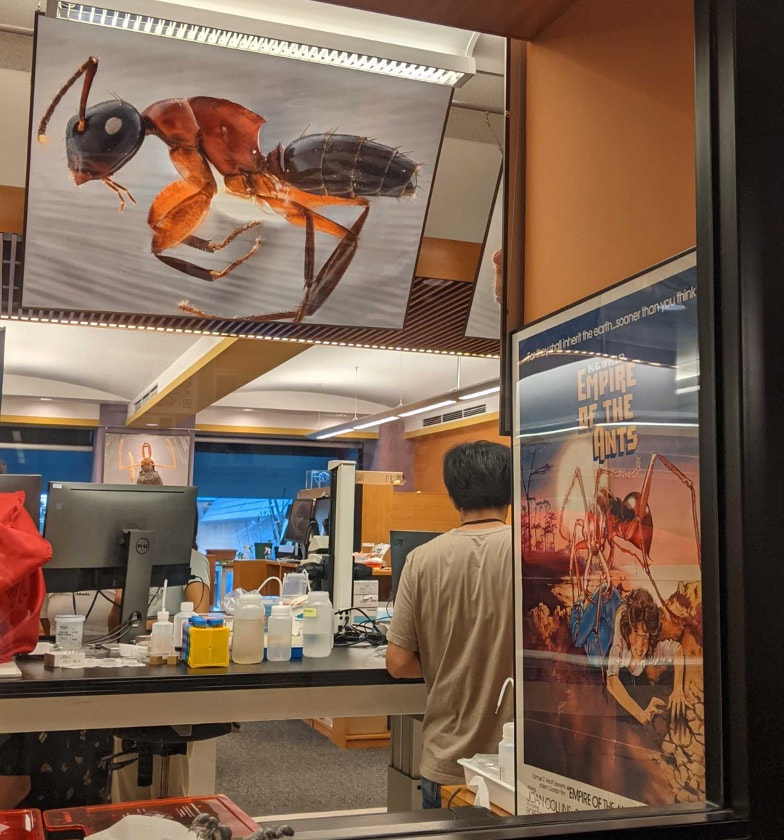
  • The poster session where all participants showed off their research (major study organisms were fish and ants).
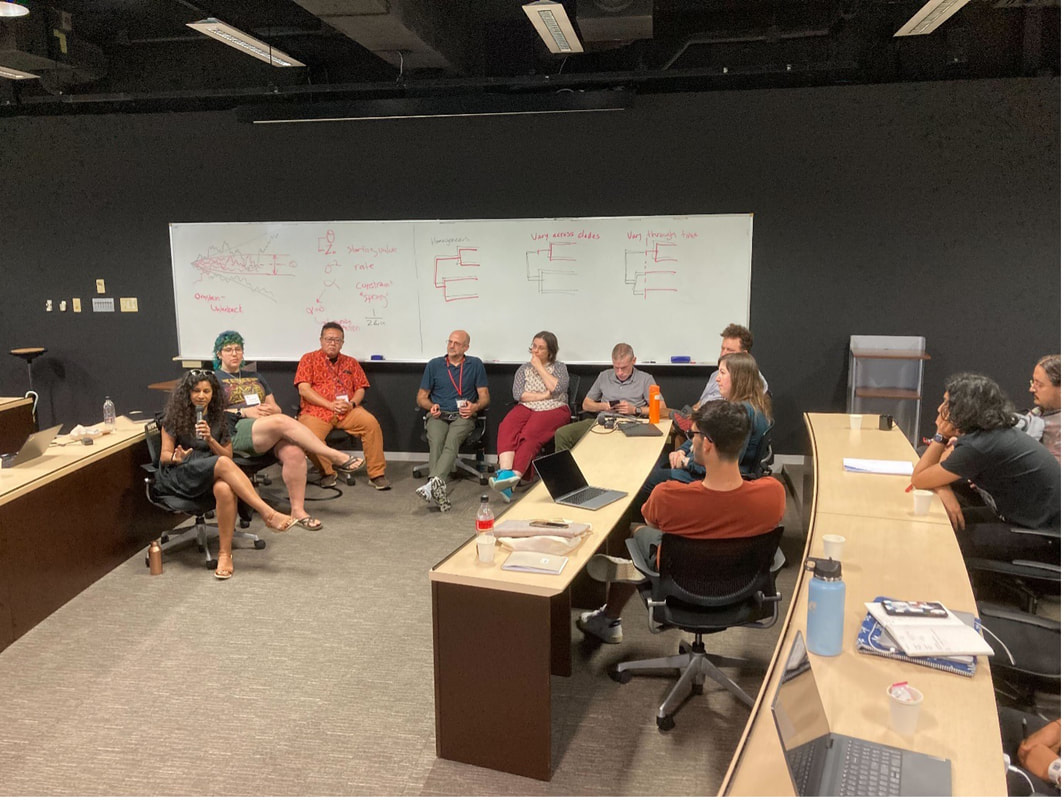
  • Roundtable of all instructors discussing the current state of the fields of comparative biology.
  • Amazing interactions with individuals from diverse backgrounds and research areas.
  • Incredibly scenery! (the workshop was located at OIST Seaside house).
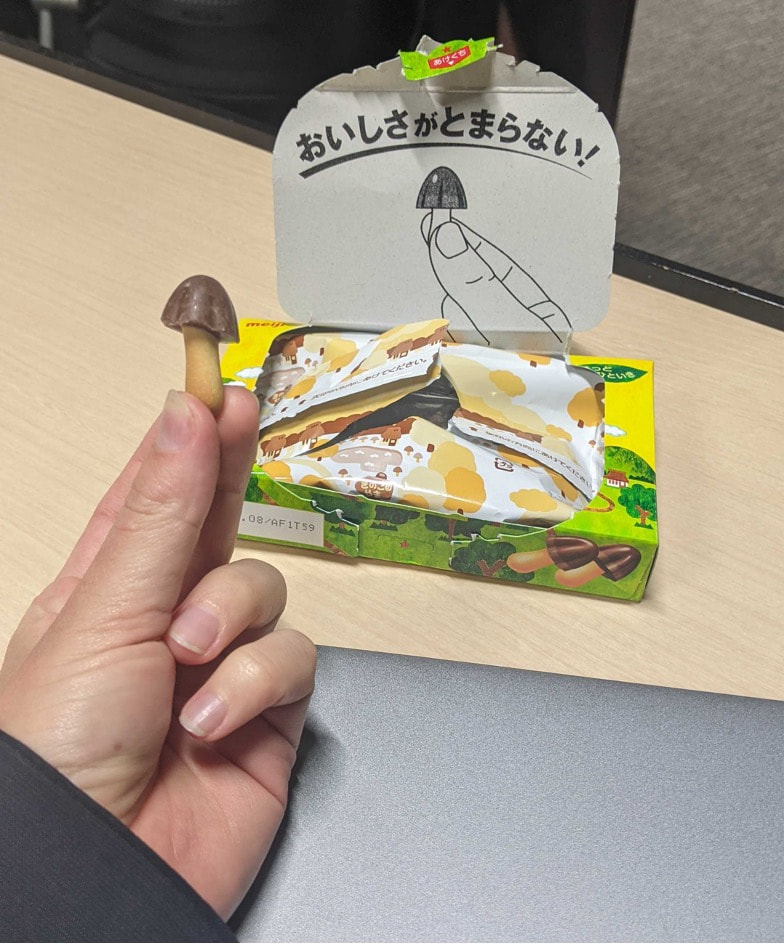
  • The discovery of choco-rooms (“choc-mushrooms” in Japanese, kinoko no yama).
0 Comments

Conference anxiety

30/9/2023

0 Comments

 
Picture
Photo: M.Lagisz
By Szymek Drobniak

Conferences can be scary and overwhelming – especially if you’re about to enter the fast-moving world of academia. Even having over 10 years of experience in doing research and participating in some of the largest conferences in my field – I still feel crippling anxiety every time I about to approach somebody at a large meeting. I still get flooded by waves of heat and racing heartbeats every single time I want to rise my hand and ask a question. What if the question will sound silly? What if the presenter won’t get it – or even worse: what if they misunderstand it? My ongoing struggle with crowd anxiety or self-esteem issues only make things worse.
 
However – over time I’ve learned that even severe public speaking anxiety can be overcome, and even the shyest and introvert scientists can learn few tricks that help to navigate the intimidating world of congresses and conferences. Here’s what I’ve learned over the years. Even if my ways won’t work at first – they will hopefully convince you that you’re not alone, and that public meetings anxiety is something pretty natural.
 
1) Instead of throwing yourself into the vortex of people – try to be methodical. Before the conference check who’s attending it. Pick few names that you would like to meet or speak to. Check if they have a talk or poster – that’s the easiest way of meeting people and having a good starter topic.
 
2) Public speaking anxiety can overwhelm you to the point of losing the ability to speak! The easiest way of convincing yourself you’re all good? Say to yourself that during your talk you’re the expert. You know everything (about your topic ) and the audience is here to hear and admire your talk. You’re their guide and guru for the coming few minutes.
 
3) Not being able to answer questions after your talk may make you feel bad or afraid of how others judge your performance. But not knowing the answer to a question – or, in fact, not understanding the question! – is totally normal. If it happens just naturally move to the next one. Make sure the person asking the question is not left in the void: invite them for a chat after the talk, or casually suggest meeting over lunch or dinner to elaborate more. You will appear professional – and potentially get another opportunity to meet someone interested in your research.
 
4) Have a conference buddy – e.g., a colleague from your lab that attends the same conference, or a friend from another university you know is also at the meeting. Having someone to talk too during breaks will make you feel more comfortable and help you relax. Don’t be afraid to ask your friends for help with any sort of anxiety you may feel. Quite often just speaking about anxiety is a great way to weaken its effects on your life.
 
5) Try not to steer away from round tables and panel discussions – even if you stay quiet most of the time, they are great moments to see more experienced scientists in action. You may learn many under-the-hood secrets of your field, get to know the thought leaders in the discipline, and often forge new collaborations.
 
8) Always rehearse your talks – either on your own, or in front of your lab-mates. There’s nothing more stressful than a badly rehearsed talk that goes overtime and makes chairpeople to cut your microphone off. But – rehearsing does not mean “memorising”. Avoid learning the “screenplay” of your talk by heart – memorise the main points and try to story-tell around them. It will sound much more natural – and there’s less likelihood you’ll get stuck having forgotten a line or two. Somewhere around the 2/3 of your talk – try to have an emergency connection to your final slides – just in case you do run overtime and are forced to wrap up before reaching the end of your presentation.
 
7) If you’re organising a conference – see if you can make it a bit more friendly for neurodivergent persons. Few recommendations you might consider include:
  • having a quiet corner far from the buzz of the biggest crowd;
  • organising a public speaking workshop or mentoring session – i.e., an event that would gently bring likeminded people together and help to break ice more easily;
  • organising poster sessions in ways that loosen any excessive crowding – e.g., by having multiple sessions that target alternating poster numbers;
  • inviting willing keynote speakers to have an open lunch sometimes during the conference (organised in a way that allows people to easily join or leave without attracting too much attention) – such events are a great way of giving less bold people a chance to meet the big names and start conversations that can than more easily continue during the conference.
​
0 Comments

Adventures Down Under: A Sunny Tale of Science and Magnetic Paradise

19/8/2023

0 Comments


by Lorenzo Ricolfi

I've just returned from my very first SETAC-AU (Australasian Society of Environmental Toxicology and Chemistry) 2023 Conference held in the sunny town of Townsville, Queensland, and I've got to admit, the experience was truly fantastic! Let's kick things off with the weather, which was an absolute winner – we were graced with delightful warm and dry conditions, not a single cloud in sight. And let's not forget the friendly atmosphere within the community. I was met with open arms, and I couldn't have asked for a better reception.
​
During the event, I had the privilege of presenting my latest research on maternal PFAS transfer in wild birds. I squeezed all the good stuff into a 12-minute presentation. On the flip side, my conference companion and lab peer, Kyle, who's quite the character, got to showcase his poster detailing the quirky world of zebrafish behaviour under pesticide exposure. But, alas, Kyle's the type who always misses the good photo opportunities – he was nowhere to be found with his camera when I was up on the stage. The tables turned though, as I managed to snap a shot of him next to his poster, which was quite the victory for me.
Picture
We bumped into quite a bunch of people and hung out extensively with the PhD students and post-docs from Bob Wong’s lab. Their work zeroes in on a range of things, particularly the effects of pollutants and pharmaceuticals on various critters' behaviors. With our research intersecting in some places, we found ourselves engrossed in some engaging conversations. An intriguing encounter came our way when we met a researcher from South Australia who's deep into studying the impact of PFAS on dolphins. She’s on the hunt to uncover whether there's any link between those unusual mortality events recorded in that part of the continent and their run-ins with these pollutants. Intriguing, right? 
Picture
Aside from all the academic jazz, we stumbled upon a rather captivating fan art exhibition right there on the beach. I know it's a tad random, but believe me, you've got to see it to believe it. And let's not forget the food at the conference – it was surprisingly good! Plus, they had an endless supply of free drinks that we tried our best, but failed miserably, to resist.

​After the conference wrapped up, Kyle and I decided to take a breather and treated ourselves to a glorious three-day escapade on Magnetic Island. Let me tell you, that place is a slice of paradise. I fell head over heels for every nook and cranny of it. We got up close and personal with koalas, spotted those vibrant blue-winged kookaburras, caught sight of majestic kingfishers, hung out with rock wallabies, watched kites soaring, marveled at echidnas doing their thing, and even had rays swimming by to say hello! Trust me, if you ever find yourself in northern Queensland, do yourself a favor and swing by this little piece of heaven on earth. 
0 Comments
<<Previous
Forward>>

    Author

    Posts are written by our group members and guests.

    Archives

    January 2026
    December 2025
    November 2025
    October 2025
    September 2025
    August 2025
    July 2025
    June 2025
    May 2025
    April 2025
    March 2025
    January 2025
    December 2024
    November 2024
    October 2024
    September 2024
    August 2024
    July 2024
    June 2024
    May 2024
    April 2024
    March 2024
    February 2024
    January 2024
    December 2023
    November 2023
    October 2023
    September 2023
    August 2023
    July 2023
    June 2023
    May 2023
    April 2023
    March 2023
    February 2023
    January 2023
    December 2022
    November 2022
    October 2022
    September 2022
    August 2022
    July 2022
    June 2022
    May 2022
    April 2022
    March 2022
    February 2022
    January 2022
    December 2021
    November 2021
    October 2021
    September 2021
    August 2021
    July 2021
    June 2021
    April 2021
    March 2021
    February 2021
    January 2021
    December 2020
    November 2020
    August 2020
    July 2020
    June 2020
    April 2020
    December 2019
    November 2019
    October 2019
    September 2019
    June 2019
    April 2019
    March 2019
    February 2019
    January 2019
    December 2018
    November 2018
    October 2018
    September 2018
    August 2018
    July 2018
    June 2018
    May 2018
    March 2018
    January 2018
    December 2017
    October 2017
    September 2017
    July 2017
    June 2017
    May 2017
    April 2017
    March 2017
    January 2017
    October 2016
    August 2016
    July 2016
    June 2016
    May 2016
    March 2016

    Categories

    All

    RSS Feed

HOME
PEOPLE
RESEARCH
PUBLICATIONS
OPEN SCIENCE
OPPORTUNITIES
LINKS
BLOG

Created by Losia Lagisz, last modified on June 24, 2015